This guide will:
- Clarify what a wallet is (with analogies)
- Explain the difference between hot and cold wallets
- Help users choose the right type of wallet for their needs
- Naturally link to your visual content and related guides
🔐 What Is a Crypto Wallet?
A crypto wallet is a tool that lets you store, send, and receive cryptocurrencies like Bitcoin and Ethereum. Unlike a physical wallet that holds cash, a crypto wallet stores the private keys that allow you to access your digital assets.
Think of it like a digital vault — only you have the keys.
🧠 Key Concept: You Don’t Store Coins, You Store Keys
Cryptocurrency “lives” on the blockchain — your wallet simply holds the keys that let you prove ownership and unlock access to those coins.
- Public Key: Like your email address — share it to receive funds.
- Private Key: Like your password — keep it secret. Whoever has this can spend your crypto.
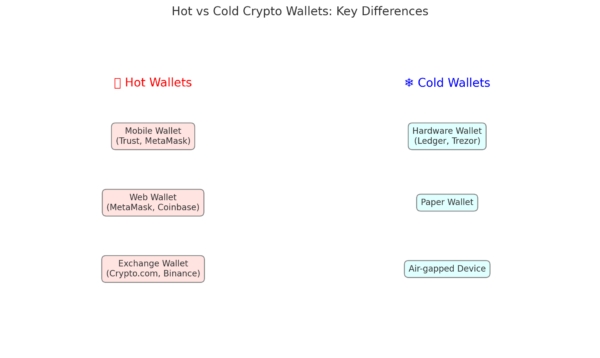
🔥 Hot Wallets vs ❄️ Cold Wallets: What’s the Difference?
The main difference between hot and cold wallets is whether or not they’re connected to the internet.
🔥 Hot Wallets (Online)
Connected to the internet. Easy to access, fast for trading and daily use.
| Type | Examples | Pros | Cons |
|---|---|---|---|
| Mobile App | Trust Wallet, Crypto.com | Convenient, free | More vulnerable to hacks |
| Web Wallet | MetaMask, Coinbase Wallet | Browser-based | Risk if browser/device is compromised |
| Exchange Wallet | Binance, Crypto.com | No setup needed | You don’t control the keys (“not your keys…”) |
💡 Best For: Beginners, casual users, frequent trading
❄️ Cold Wallets (Offline)
Stored entirely offline. Best for long-term holding and large amounts of crypto.
| Type | Examples | Pros | Cons |
|---|---|---|---|
| Hardware Wallet | Ledger, Trezor | Most secure, portable | Costs money, needs setup |
| Paper Wallet | QR code on paper | Fully offline | Can be lost/damaged, not user-friendly |
| Air-gapped Device | USB or dedicated offline PC | Ultimate privacy | Advanced use case only |
💡 Best For: Long-term holders, security-focused users
📦 So… Which Wallet Should You Use?
It depends on what you’re doing:
| User Type | Recommended Wallet |
|---|---|
| Total Beginner | Crypto.com (built-in exchange wallet) |
| Mobile User | Trust Wallet, MetaMask mobile |
| Long-Term Holder | Ledger Nano S/X or Trezor One |
| Privacy-Focused | Paper wallet or air-gapped device |
📉 Common Wallet Mistakes to Avoid
- ❌ Losing your seed phrase (you can’t recover lost crypto!)
- ❌ Leaving large amounts on exchanges
- ❌ Sharing your private key (never do this!)
- ❌ Not using 2FA (two-factor authentication)
🔗 Related Guides:
- 👉 How to Buy Crypto in the UK (Beginner’s Guide)
- 👉 Crypto Mining Explained + Enter Our Mining Device Giveaway
- 👉 Crypto.com Review
💬 Final Thoughts
A crypto wallet is one of the most important tools in your crypto journey. Whether you’re trading daily or holding long-term, choosing the right wallet — and protecting your private keys — is essential.
You don’t need to be a tech expert to use one. Just remember:
“Not your keys, not your coins.”