
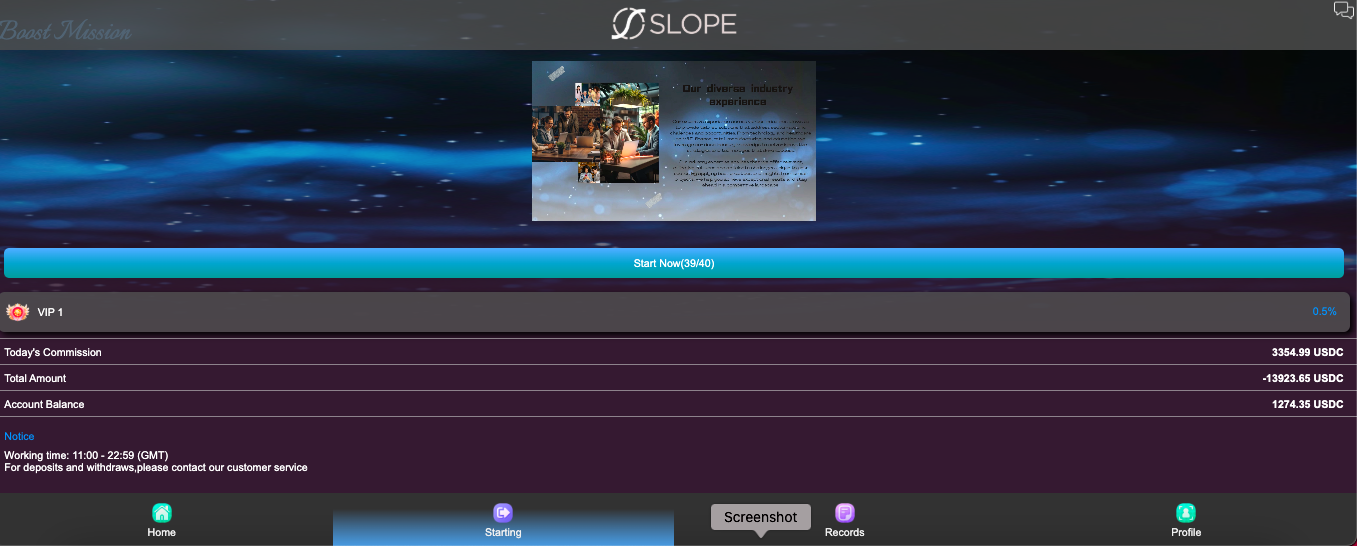
https://slopesoftware.xin/com_software
The slope Workbench Crypto scam
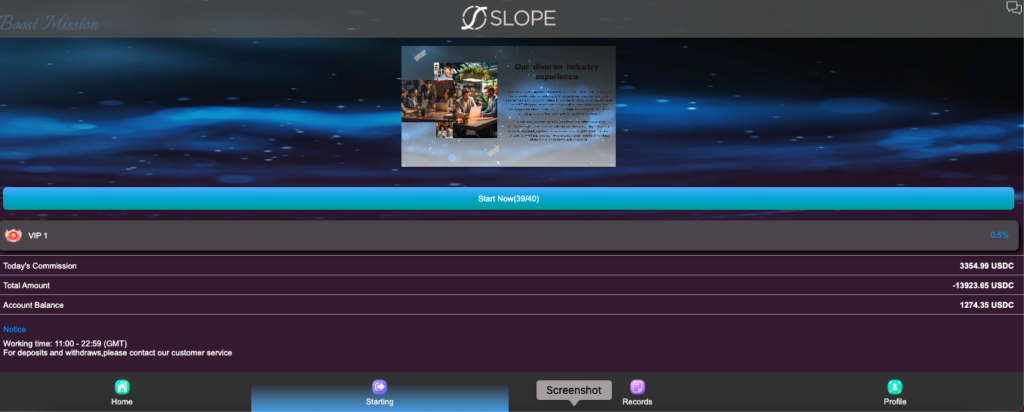
If your seeing this screen and you deposit money you are going to loose your money.
Beware of Task Scams: The Latest Crypto Fraud Targeting Job Seekers
In recent months, a surge in “task scams” has been exploiting job seekers and online gig workers, using fake job offers to lure victims into fraudulent cryptocurrency schemes. These scams trick individuals into performing tasks under the promise of high payouts, only to leave them out of pocket and empty-handed.
How Task Scams Work
Scammers pose as recruiters or representatives of online gig platforms, reaching out via WhatsApp, Telegram, LinkedIn, and email. They promise easy money for simple online tasks like clicking on ads, liking videos, writing reviews, or completing surveys. But there’s a catch—before cashing out, users are pressured into investing their own money, which they never get back.
The Common Playbook of Task Scams:
- Step 1: The “Job Offer”
- You receive an unsolicited message about an online job that pays well for simple tasks.
- The recruiter claims to be from a well-known company or a “special project” requiring workers.
- Step 2: Small, Initial Payouts
- You start with basic tasks (watching videos, rating websites, etc.).
- The platform pays out a small amount to gain your trust.
- Step 3: The “VIP” Trap
- You’re told that higher rewards are available if you “invest” your own money to join a VIP level or unlock higher-paying tasks.
- The scam often includes a fake dashboard showing increasing profits to push you into depositing more.
- Step 4: The Payout Block
- When you try to withdraw earnings, you face sudden fees, verification delays, or minimum balance requirements.
- Some victims report investing thousands before realizing they can’t get their money out.
- Step 5: Vanishing Act
- The scam site eventually shuts down, deletes accounts, or blocks users who question payouts.
- The scammers disappear with the funds, and the victims have no way to recover their losses.
Red Flags and How to Protect Yourself
The most effective defence against task scams is learning to spot the warning signs early. Scammers deliberately craft convincing-looking offers designed to appear legitimate, but if something feels off about a job opportunity, it almost certainly is. Here are the key red flags that should make you walk away immediately:
- Unsolicited contact: Legitimate recruiters rarely reach out via WhatsApp, Telegram, or similar messaging apps. They use official channels like LinkedIn, company websites, or registered recruitment agencies with verifiable credentials.
- Unrealistic pay: If an offer promises £50 or more per hour for watching videos or clicking links, it’s not real. Genuine gig work pays modest rates that reflect the actual effort involved.
- Requests for upfront payment: No legitimate employer asks you to invest your own money to start work. “VIP memberships,” “registration fees,” “admin charges,” or “investment opportunities” are classic scam tactics designed to extract cash.
- Vague job descriptions: Real positions clearly explain what you’ll do, who you’ll work for, how long tasks take, and how you’ll be paid. Scams deliberately use fuzzy language to avoid specifics and make false claims.
- No verifiable details: Check if the company has a genuine, professional website, current Companies House registration, and a real physical address. Scammers use fake or expired registrations that fail basic checks.
Before engaging further, verify legitimacy by searching the company on Companies House (beta.companieshouse.gov.uk), checking Trustpilot and Google Reviews for independent customer feedback, and contacting the company directly using only details from their official website—never use contact information provided by the recruiter. Always request a formal written job offer or contract before starting any work. Most importantly, remember this golden rule: legitimate work never requires you to pay money upfront or make any financial investment. If you’re pressured to invest money, blocked from withdrawing earnings, asked for “security deposits,” or given any reason to pay before earning, stop immediately and report the scam to Action Fraud (actionfraud.police.uk) and your bank.
Reporting and Recovering from Task Scams in the UK
If you’ve already been caught by a task scam, don’t panic—there are steps you can take to report the fraud and potentially recover some or all of your money. Act quickly, as the faster you respond, the better your chances of recovery.
The first step is to report the scam to Action Fraud, the UK’s official fraud reporting centre. You can report online at www.actionfraud.police.uk or call 0300 123 2040. Provide as much detail as possible: the scammer’s contact details, platform URL, payment methods used, and screenshots of communications. Action Fraud logs reports centrally, helping authorities identify patterns and organised fraud rings.
Next, contact your bank or payment provider immediately. If you’ve transferred money via bank transfer, they may be able to reverse the payment if you act within hours of the transaction. For cryptocurrency transactions, contact your crypto exchange or wallet provider—whilst blockchain transactions are irreversible, exchanges can sometimes freeze or investigate suspect accounts if reported quickly enough.
Report the fraudulent website to the Internet Crime Complaint Centre and consider reporting it to your internet service provider for potential blocking. If the scam involved cryptocurrency, also notify the Financial Conduct Authority (FCA) at www.fca.org.uk, as they oversee financial crimes.
Be wary of “recovery services” that promise to get your money back for an upfront fee—these are often secondary scams preying on victims. Legitimate authorities never charge fees for fraud investigation.
Finally, register with Cifas (www.cifas.org.uk), the UK’s fraud prevention organisation. This protects you against identity fraud and alerts financial institutions to your status as a victim, helping prevent further exploitation.
Reporting doesn’t guarantee recovery, especially with cryptocurrency, but it creates an official record and helps protect others from the same fraudsters. Keep all documentation of your communications and transactions—you may need these for disputes with your bank or future legal action.


