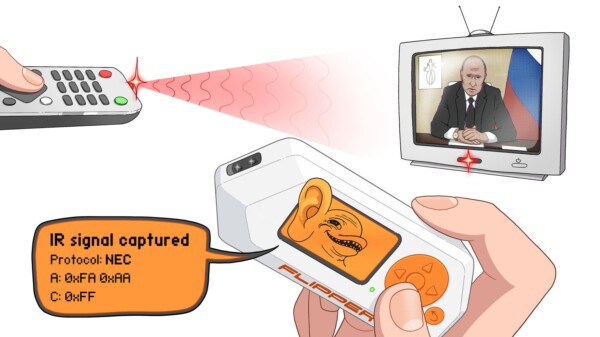
Flipper Zero Infrared (IR) Guide, Infrared is one of the simplest and most useful parts of the Flipper Zero. Unlike NFC, RFID, or Sub-GHz, IR has very few restrictions, works reliably, and gives immediate results. This guide explains exactly how to use IR step by step, where people go wrong, and what (if any) hardware add-ons you need.
This guide is written for complete beginners.
What Infrared (IR) on the Flipper Zero Is Used For
Infrared is commonly used by:
TV remotes
Soundbars
Projectors
Air conditioners
Set-top boxes
DVD / Blu-ray players
With IR, the Flipper Zero can:
Read IR remote signals
Save individual buttons or full remotes
Act as a universal remote
Control devices you own
IR does not involve radio waves or encryption, which is why it works so well.
What You Need to Use Infrared
Required:
Flipper Zero only
Optional:
Nothing — no add-ons required
You do not need:
Wi-Fi Dev Board
External antennas
Apps or firmware mods
Infrared works out of the box.
Where the IR Transmitter and Receiver Are
On the Flipper Zero:
The IR transmitter is at the top edge
The IR receiver is also at the top
For best results:
Point devices directly at each other
Keep line-of-sight
Stay indoors (sunlight interferes)
Step-by-Step: How to Read (Learn) an IR Remote Button
- Open Infrared from the main menu
- Select Learn new remote or Learn
- Point your remote at the top of the Flipper (2–5 cm away)
- Press and hold a button on the remote
- Wait for confirmation
- Name the button (e.g. Power, Volume Up)
- Save it
Repeat for each button you want.
Step-by-Step: Create a Full IR Remote Profile
- Open Infrared
- Choose Learn new remote
- Give the remote a name (e.g. Living Room TV)
- Learn buttons one by one
- Save the profile
You can now use the Flipper as a full replacement remote.
Step-by-Step: Use the Flipper as a Universal Remote
- Open Infrared
- Go to Saved
- Select your saved remote
- Choose a button
- Press OK to transmit
Point the Flipper at the device just like a normal remote.
Using Built-In IR Remote Libraries
The Flipper Zero includes pre-loaded IR profiles for many devices.
To use them:
- Open Infrared
- Select Universal remotes or TV / Audio / AC
- Choose brand and model
- Test buttons
If it works, you don’t need to learn your own remote.
How to Test IR Is Working (30-Second Check)
If you want to confirm IR works:
Use a TV
Open Infrared
Use a built-in TV profile
Press Power
If the TV responds, IR is fully functional.
Common IR Problems and Easy Fixes
“Nothing happens when I press a button”
• You’re too far away
• You’re in bright sunlight
• Wrong remote profile
Fix:
• Move closer
• Go indoors
• Try learning the remote manually
“IR learning fails”
• Button pressed too quickly
• Remote battery weak
• IR window blocked
Fix:
• Hold button longer
• Replace remote battery
• Clean the top of the Flipper
Why IR Is So Reliable Compared to Other Sections
IR works well because:
No encryption
No rolling codes
No region restrictions
Simple signal format
That’s why it’s ideal for beginners.
Best Beginner IR Experiments
Safe and useful things to try:
Replace your TV remote
Create a combined TV + soundbar remote
Control a projector
Test multiple devices from one profile
This is where most users first think, “OK, this thing is actually useful.”
What You CANNOT Do With Infrared
You cannot:
Control RF-only devices
Control smart devices without IR
Use IR through walls
Control devices without line-of-sight
If a device doesn’t have an IR sensor, IR won’t work.
Do You Need Any IR Add-Ons?
No.
The built-in IR hardware is sufficient for almost all home use.
When Infrared Is the Best Tool
Use IR when:
You want instant results
You want to demonstrate the Flipper to someone
You want practical daily value
You want a frustration-free feature
IR is often the feature people keep using long-term.
Final Thoughts on Infrared
Infrared is the most user-friendly and dependable part of the Flipper Zero. It delivers real, practical value without restrictions or complexity. If someone thinks the Flipper Zero is “overhyped,” IR is usually the feature that changes their mind.
Next in the Series
The next deep dive is:
Flipper Zero Bluetooth Guide (BLE): What It Can Detect, How to Use It, and Its Limits