What Are NFTs? A Beginner’s Guide to Non-Fungible Tokens
You’ve seen the headlines: a digital ape image sells for six figures, music albums are launched as NFTs, and video game items are traded like gold. Whether it sounds like hype or history in the making, one thing is clear — NFTs are here to stay.
But what are NFTs, really? Are they worth your attention, your money, or your time?
This guide unpacks everything you need to know about NFTs, from how they work to how people use them — whether you’re curious, cautious, or ready to jump in.
🔍 What Is an NFT?
NFT stands for Non-Fungible Token — a unique digital asset stored on a blockchain. Unlike fungible assets (e.g., money, Bitcoin), which are interchangeable and identical in value, NFTs are one-of-a-kind and can’t be swapped equally.
Each NFT holds data that makes it unique, such as:
- Ownership history
- Creator information
- Metadata (e.g., title, traits, unlockable content)
- A link or embedded file (e.g., image, video, document)
🎨 Example: A £10 note is fungible — it’s the same as any other £10. But a signed Banksy print? That’s non-fungible. Same goes for NFTs in the digital world.
📦 What Can Be an NFT?
NFTs can represent almost anything digital — and in some cases, even physical items. Here’s a breakdown:
✅ Common NFT Types
| Category | Examples |
|---|---|
| Art | Digital paintings, generative art, 3D renderings |
| Collectibles | Trading cards, avatars, rare items |
| Gaming Assets | Skins, weapons, land plots, characters |
| Music | Exclusive tracks, albums, royalty rights |
| Videos | Highlight reels, animations, film moments |
| Virtual Real Estate | Parcels of land in metaverses like Decentraland |
| Event Tickets | Verified passes with anti-counterfeit features |
| Identity/Access | Membership badges, DAO tokens, proof of participation |
NFTs have even been used as legal documents, diploma certificates, and real estate contracts in blockchain pilot programs.
🧠 Why Do NFTs Matter?
NFTs aren’t just hype — they solve a real problem: digital ownership. Before NFTs, owning something online was like “borrowing it” through platforms. NFTs change that by letting users truly own, resell, or transfer digital content — without permission from a company or central platform.
💡 Key Benefits:
- Proven authenticity — NFTs are verifiable on public blockchains
- Ownership rights — Control and transfer assets at will
- Creator royalties — Artists can earn from resales automatically
- Interoperability — Use items across platforms (e.g., games or metaverses)
🌐 How Do NFTs Work?
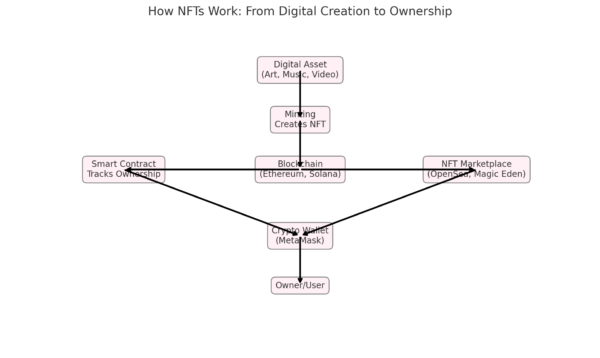
NFTs are powered by blockchains — especially Ethereum, which introduced the ERC-721 and ERC-1155 standards for NFTs.
Here’s a simplified breakdown of the process:
- Minting: An NFT is created and registered on the blockchain.
- Smart Contract: A bit of code defines how the NFT behaves (ownership, resale rules, royalties).
- Wallet Ownership: When you buy an NFT, it’s transferred to your wallet — not stored on a website.
- Verification: Anyone can check who owns the NFT using a block explorer like Etherscan.
💰 Why Are NFTs Valuable?
The value of an NFT isn’t just in what it is, but in what it represents:
- Original artwork from a known creator
- A limited-edition item or collectible
- Access to a community or game
- A digital identity or brand
- Rights to music, media, or in-game earnings
Some NFTs go viral due to hype or status symbols (like CryptoPunks or Bored Apes), while others offer long-term utility in games, apps, or metaverses.
📊 NFT Use Cases by Industry
| Industry | NFT Application |
|---|---|
| Art | Creators sell directly, earn royalties |
| Music | Artists tokenise albums, sell exclusive content |
| Gaming | Players own, sell, and trade in-game assets |
| Events | Tickets verified on blockchain, resale control |
| Fashion | Wearable NFTs for avatars or digital shows |
| Education | Credentialing and certification |
| Real Estate | Deeds or contracts as NFTs (experimental) |
| Communities | NFT-based access to clubs, DAOs, voting power |
🛍️ How to Buy an NFT (Step-by-Step)
- Set up a crypto wallet – MetaMask is most common.
- Buy cryptocurrency – Usually ETH (for Ethereum NFTs) or SOL (for Solana).
- Choose a marketplace – OpenSea, Magic Eden, Blur, Foundation.
- Connect wallet – Use the browser extension or mobile dApp browser.
- Browse or mint – Buy on the secondary market or mint from new projects.
- Approve transaction – Confirm via your wallet.
- View NFT in your wallet – It’s stored on-chain and viewable via the platform or NFT viewer.
🧯 NFT Scams & Security Tips
While the tech is powerful, the space is still new — and risky.
⚠️ Common Risks:
- Fake NFTs or impersonator collections
- Malicious smart contracts (steal your assets)
- Phishing links that mimic real marketplaces
- Overhyped “rug pulls” that vanish after a mint
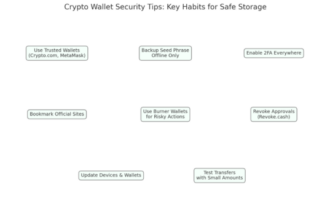
✅ Stay Safe By:
- Using a hardware wallet for valuable NFTs
- Verifying contracts before minting
- Bookmarking official sites
- Never clicking unknown links in Discord or Twitter DMs
🔐 Read: Crypto Wallet Security Tips
🧠 Final Thoughts: Are NFTs Worth It?
NFTs are more than JPGs — they’re a new way of owning, sharing, and interacting with digital content. They’ve empowered artists, built new business models, and opened up community-powered economies.
But it’s still early. Prices are volatile. Tech is evolving. And not every project will succeed.
If you’re curious: start small, collect what you love, and focus on learning.
If you’re building: NFTs offer powerful tools to own your future, your work, and your community.